Holes from removed fixtures, cracks at ceiling corners, and sagging sections from water leaks require drywall repair or replacement before you can paint or hang anything securely. The service rebuilds wall and ceiling surfaces so they sit flat, joints disappear under finish coats, and fasteners hold properly. Roth's Gutter Solutions provides drywall installation and repair in Buffalo for renovation projects, damage correction, and new interior construction where framing needs a finished surface.
Drywall work involves cutting panels to fit framing layout, securing them with screws at correct spacing, taping joints with paper or mesh, applying joint compound in multiple coats, and sanding smooth once dry. In Buffalo homes, older plaster walls sometimes get replaced with drywall during remodeling because drywall installs faster and costs less, though it requires careful handling to avoid cracking during transport and installation.
Request a detailed estimate to assess the extent of drywall damage and repair requirements.
Wall Surfaces Built to Stay Flat
Drywall in Buffalo for damaged walls, ceiling repairs, and new construction installations
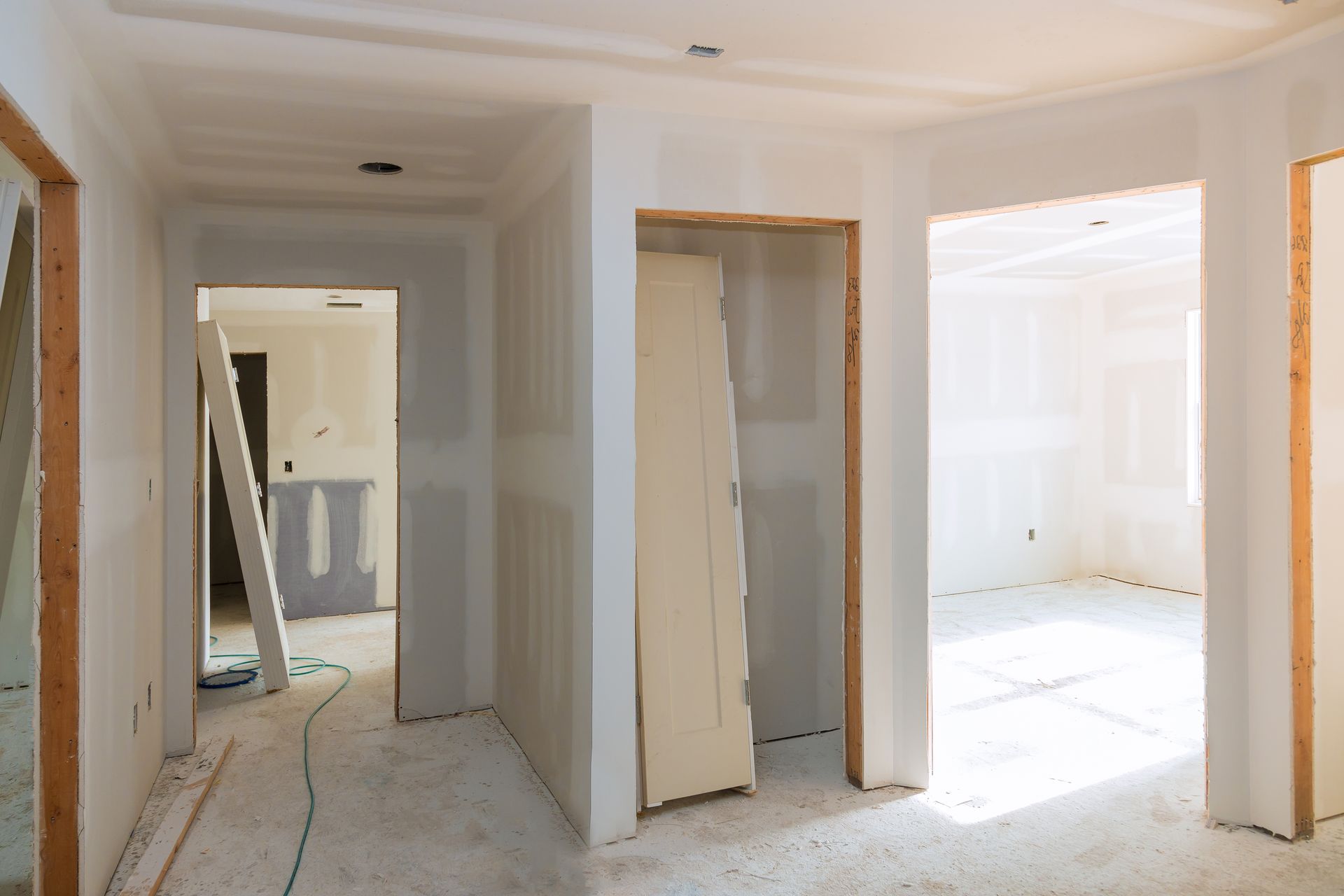
What You Notice Once Drywall Is Finished
Installation begins with measuring wall dimensions and cutting drywall panels so seams fall on stud centers. You see screws driven flush with the surface but not deep enough to tear the paper face, which would weaken the hold. Joint compound gets applied in thin layers—first coat embeds tape, second coat widens the seam, third coat feathers edges so the joint blends invisibly into surrounding surface. Each layer must dry completely before the next goes on, or the compound cracks as moisture escapes.
Completed drywall feels smooth when you run your hand across it, with no bumps at seams or dimples at screw locations. Corners form crisp, straight lines where walls meet ceilings or other walls. When painted, joints remain invisible because the surface sits uniformly flat. Nail pops or cracks do not appear at seams within the first year if the work was done correctly, though settling in new construction can cause minor movement.
Drywall installation includes hanging panels, taping joints, applying finish coats, and sanding. It does not include painting, insulation installation behind the panels, or electrical and plumbing work that must happen before drywall goes up. Moisture-resistant drywall, often called green board or purple board depending on brand, gets used in bathrooms and other high-humidity areas to resist mold growth and sagging.
Homeowners in Buffalo often ask about repair methods, finish quality, and material choices for drywall projects.
How do you repair large holes in drywall? Holes bigger than a few inches require cutting back to the nearest studs on either side, installing backing material or new framing, screwing in a patch piece, then taping and mudding the seams. Small holes get filled with a patch kit or repaired using the California patch method, where a piece of drywall slightly larger than the hole gets inserted and secured from behind.
What causes drywall seams to crack after installation? Inadequate joint compound application, skipping coats to save time, or using compound that has not dried fully before the next layer goes on all cause cracking. House settling, humidity changes, and structural movement also stress seams, which is why properly taped and mudded joints use multiple thin coats rather than one thick application.
Why does Buffalo's climate matter for drywall installation? Drywall panels absorb moisture from the air, which can cause slight expansion. Installing panels with small gaps at edges allows for this movement and prevents buckling. During winter heating season, low indoor humidity causes compound to dry faster, which sounds helpful but can lead to cracking if layers are applied too quickly without adequate curing time.
What finish level should I specify for drywall work? Level 4 finish suits walls that will be painted with flat or eggshell paint and provides smooth, concealed seams. Level 5 adds a skim coat over the entire surface and works for walls receiving glossy paint or critical lighting conditions where every imperfection shows.
When does damaged drywall need replacement instead of repair?
Water damage that has softened the gypsum core, mold growth behind the surface, or structural damage affecting multiple panels usually requires replacement. Surface dents, small holes, and isolated cracks typically get repaired in place without removing the entire panel.
Roth's Gutter Solutions handles drywall installation and repair across Buffalo with attention to joint finishing that stays invisible long-term. Schedule a consultation to review damage and discuss finish level requirements for your project.